

F
Authors: Michael Erb and Ranganatha Sitaram
1. Neuroscience and Meditation
Since the early sixties of the last century, neuroscientific
investigations of meditation have been performed with
electroencephalographic (EEG) recordings. Although
neuroelectric correlates of altered states of consciousness during
meditation are not yet firmly established, the primary findings
have implied increases in theta and alpha band power, and
decreases in overall frequency (for a review see Cahn & Polich
2006). With the development of neuroimaging techniques like
Positron Emission Tomography (PET) and functional Magnetic
Resonance Imaging (fMRI) in the 80s and 90s, these new
methods have also been applied to reveal the neurophysiologic
correlates of modified self-experience in meditation practice.
For many years the 14th Dalai Lama Tendzin Gyatsho has been
interested in Western science. In 1987, a series of meetings—the
Mind and Life conferences—were initiated between the Dalai
Lama and a number of prominent neuroscientists. This led to
numerous neuroscience studies on meditation (Barinaga 2003)
including neuroimaging, especially at the University of
Wisconsin (Madison) surrounding the group of neuroscientist
Richard Davidson.
Unlike Western science, Buddhist philosophy assumes the
existence of six senses that allow the mind to interpret the world.
In addition to the senses of seeing, hearing, touch (body sense),
taste and smell, the sixth sense or inner sense allows us to
monitor our thoughts and feelings. Buddhism is therefore
viewed as a science of the mind with insights based on more than
2,500 years of studying the mind by introspection. Western
neuroscience may thus gain valuable insights from this
experience by adapting some of these practices in theoretical and
experimental investigations.
A fundamental question for neuroscience is the elucidation of the
relationship between subjective experience and neural firing. A
flash of light, for example, produces measurable evoked
potentials in the visual cortex. While it is relatively
straightforward to relate simple sensory stimuli to brain activity,
it is, however, far less obvious how complex subjective states
4 Neuroimaging Experiments on Meditation
such as the experience of meditation are reflected in brain
activity. Experimental approaches to meditation can be broadly
classified into two major types with different goals concerning
the states and traits of meditation (Cahn & Polich 2006). The
first one investigates the differences between the mental state in
normal day-to-day thinking, and the specific mental state during
an ongoing meditation session. The second approach investigates
the effect of meditation that persists even when not presently
engaged in meditation practice. Both approaches have provided
insight into the effects of meditation practice on the mind and
brain of humans.
2. The Tübingen Experiment on Śūnyatā meditation
In 2006, the Śūnyatā meditation center in Stuttgart (Germany)
contacted Dr. Michael Erb and asked if he would be interested in
conducting neuroimaging experiments on brain activity of the
Buddhist master of the school, Master Thích Thông Triệt, during
meditation in the MR scanner. After discussing the challenges
and scope of such an investigation and consulting with another
neuroscientist, Dr. Ranganatha Sitaram, the authors consented to
embark on a series of experiments to examine Śūnyatā
meditation with different levels of expertise. The aim of our
study was to investigate whether there are differences in brain
activations between meditation and normal day-to-day thinking.
And if so, we wanted to further identify brain activations
pertaining to different stages and techniques of Śūnyatā
meditation. The idea was to investigate whether specific brain
activity is related to different techniques of meditation.
Before discussing in more detail our hypotheses, an explanation
of the central doctrine of Śūnyatā meditation is useful for a better
understanding of the framework. Buddha described the methods
of meditation as follows (as per Bāhiya Sutta, Anderson 2002):
“Please train yourselves thus: In the seen, there will be just the
seen. In the heard, there will be just the heard. In the sensed,
there will be just the sensed. In the cognized, there will be just
the cognized. When for you, in the seen there is just the seen, in
the heard just the heard, in the sensed just the sensed, in the
cognized just the cognized, then you will not identify with the
seen, and so on. And if you do not identify with them, you will
not be located in them; if you are not located in them, there will
be no here, no there, or in-between. And this will be the end of
suffering.”
The word Śūnyatā means emptiness in Sanskrit. This meditation
practice has its origin in the Buddhist philosophy that signifies
the impermanent nature of form, or, in other words, that objects
in the world do not possess essential or enduring properties. In
Buddhist spiritual teaching, cultivating insight into emptiness
leads to wisdom and inner peace. Śūnyatā meditation practice is
aimed at developing an ability to avoid discursive (wandering,
long-winded) thought. Instead insight into the nature of reality is
acquired through direct perception of the internal (bodily) and
external (sensory) states. So, automatic associations of former
episodes from memory, evaluation of perceptions with respect to
ones’ own existence and planning of future actions will be
reduced, whereas self-awareness and awareness of the things in
the world will increase.
2.1 Hypothesis
The aim of the present study was to investigate state changes in
the brain and accompanying bodily reactions during Śūnyatā
meditation, when confronted with a variety of external stimuli.
Based on the rationale behind the Śūnyatā practice, we
hypothesized that the following state changes occur during
Śūnyatā meditation in comparison to normal day-to-day
thinking: First, brain regions that have been associated with
memory retrieval, planning and executive control will be
deactivated; second, brain areas related to interoception and
sensory perception will be activated; and third, the respiration
rate (and possibly other physiological signals) will be reduced.
As mentioned in the chapter on Biofeedback in Zen meditation,
the Buddhist doctrine is embodied in a practice of
meditation that guides the practitioner to “Not Naming the
Object” and rather helps him to “see it as seeing” (bare or natural
seeing), “hear it as hearing” (bare or natural hearing), “feel it as
feeling” (bare or natural touch) and “know it as knowing” (bare
or natural cognition).
We investigated the following four different meditative
practices: natural seeing, natural hearing, natural touch and
natural cognition. The objectives of the study were to identify
brain regions associated with the different sensory states of
meditation. In addition, we wanted to investigate whether there
were common activations across all these practices. This was
motivated by the idea that all practices are based on the Buddhist
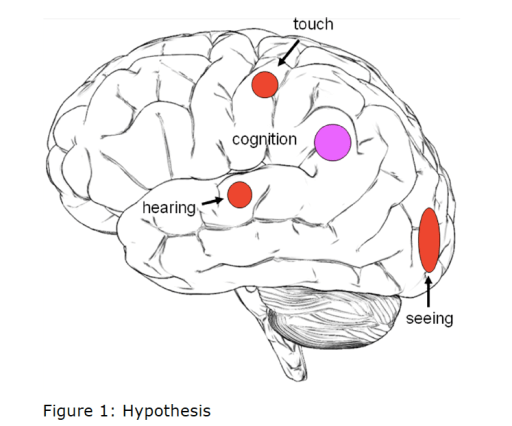
doctrine explained above. We expected to find activations in
visual areas (occipital cortex) during natural seeing, in auditory
areas (temporal lobe) during natural hearing and somatosensory
areas (postcentral gyrus) during natural touch. We also expected
brain activations common to all meditation practices in the
temporo-parieto-occipital junction (e.g. Brodmann Area (BA)
39), which plays a role in multi sensory integration (Fig. 1).
Since 2006, we have scanned several meditators from the
Śūnyatā Meditation Stuttgart e.V. (Germany) and monks and
nuns from Śūnyatā Meditation Center in Riverside (CA, USA); a
total of 8 participants in 18 sessions, including 6 sessions with
Master Thích Thông Triệt.
In this chapter, we will present the findings from the group and a
few single cases and then focus on the results of the experiments
with the Master. It should be noted here that while the method
allows a description of brain activations elicited during
meditation, it is not suitable to investigate the effects of
meditation on the autonomic nervous system and physical health.
2.2 Measurement Methods
For a better understanding and interpretation of the results of our
experiments, it is necessary to provide a summary of the
capabilities and limitations of the neuroimaging approach used in
this study.
2.2.1 Functional magnetic resonance imaging (fMRI)
Functional magnetic resonance imaging (fMRI) is currently one
of the most widely used methods for mapping human brain
functions. FMRI measures the hemodynamic response to neural
activity in the brain. This is possible because increased activity
in nerve cells also increases their consumption of oxygen. The
local response to this oxygen utilization is to increase blood flow
to regions of increased neural activity, which occurs after a delay
of approximately 1–5 seconds. This hemodynamic response rises
to its peak of intensity around 4–5 seconds, before falling back to
baseline (and typically undershooting slightly). Thus, neural
activity leads to local alterations in the relative concentration of
oxygenated hemoglobin and deoxygenated hemoglobin, cerebral
blood volume and blood flow. As hemoglobin is diamagnetic
when oxygenated and paramagnetic when deoxygenated, this
difference can be measured by magnetic susceptibility sensitive
MR sequences (e.g. echo planar imaging – EPI). The resulting
blood-oxygenation-level dependent signal (BOLD signal, Ogawa
1990) is an indirect measure of the corresponding neural activity.
In a typical fMRI experiment, the BOLD signal differences can
reach up to 5% of its baseline value, implying that these small
effects can only be detected by many fMRI measurement
volumes and sophisticated statistical analysis methods. The
standard design of fMRI experiments is the so-called block
design, where blocks with stimulation or task condition are
alternated with blocks of rest or control condition. As the length
of the hemodynamic response function (HRF) is about 15
seconds, conditions typically alter every 20 to 30 seconds to be
able to obtain multiple rises and falls of the response. With a
typical spatial resolution of 3 mm, it is possible to scan the
whole brain with EPI sequences in about 2-3 seconds, so that as
many as 10 brain volumes can be acquired within each block.
After averaging the measured volumes in all rest blocks and all
task blocks respectively, one can determine the difference
between these mean values to show locations with higher values
in task blocks above a selected threshold as overlays on
anatomical images, typically measured with a resolution of
1x1x1 mm3. A preliminary online analysis can be performed
immediately on the scanner computer during fMRI acquisition of
the experimental protocol. For refined analysis, there are several
statistical methods available such as modeling the expected
hemodynamic response and estimating parameters of a general
linear model with the measured data. In addition some
preprocessing steps like head motion correction, that is
realigning the images to the first volume, and smoothing of the
images can help to improve the statistical power of analysis.
Experimental protocol
We were confronted with two potential problems in the
experimental setup. One concerns the scanner environment
which is not optimal for meditation: the participants are placed in
a narrow scanner with considerable measurement noise. To
overcome this issue, it was important to have highly experienced
meditators who would be able to adjust to the situation. The
other problem is related to setting up suitable task and control
conditions. For the present experiment, it was doubted whether
meditators could achieve rapid switching between normal
thinking (control condition) and meditation (task condition)
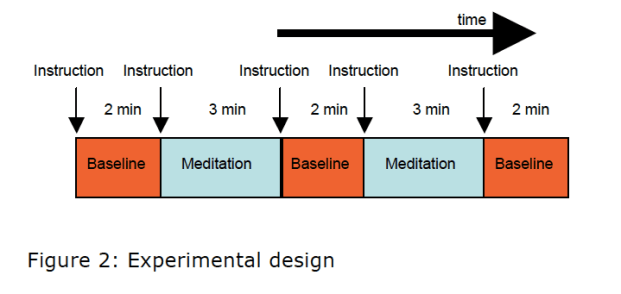
within a few seconds. It was therefore decided to use longer
block lengths of alternating baseline (3 times of 2 minutes each)
and meditation (2 times of 3 minutes each) conditions (Fig. 2).
This was a reasonable trade-off between the requirements of
effective fMRI measurements and normal duration of meditation
sessions.
2.2.2 Physiological Signals
In addition to the BOLD signal, we recorded respiration and
pulse signals to calculate time courses of respiration amplitude
and frequency together with heart beat frequency. From these
signals, we tried to estimate the time course of actual meditative
states. There was no clear indication or previous data from
Śūnyatā meditation suggesting that respiration rate changed as a
consequence of the meditation state, or whether control of
respiration rate was used to reach the meditation state as in other
meditation practices.
After each session, participants were asked to rate the depth of
the meditative state achieved in each meditation block by using a
questionnaire.
2.2.3 Electroencephalography (EEG)
For some sessions, we were able to simultaneously record EEG
signals from 31 electrodes with a MR compatible EEG amplifier
and EEG cap (BrainAmp MR, Brain Products GmbH, Munich,
Germany). EEG measures the brain’s electrical activity directly,
while fMRI records changes in blood flow. Combining EEG and
fMRI allows for brain signals to be recorded at a high temporal
as well as spatial resolution. Lutz and colleagues (Lutz et al.
2004) have shown increased gamma oscillations during
meditation. We thus expected to classify different stages of
meditation with the help of EEG signals and use these time
courses to find corresponding locations in the fMRI signal.
It should be noted here that there are still technical difficulties
associated with combining fMRI and EEG measurement
techniques, including the need to remove the MRI gradient
artifacts present during MRI acquisition and the cardioballistic
artifact (resulting from the pulsative motion of blood and tissue)
from the EEG signals. These difficulties may interfere with data
interpretation.
2.3 Additional tasks
In addition to the meditation protocol described previously, we
performed an extended examination with the Master Thích
Thông Triệt with paradigms targeting object recognition and
language related areas, different levels of thinking, and the
differences between sensory stimulation and no stimulation
under normal thinking and meditation conditions. In these
sessions, we used a block design with blocks of 30 seconds each
for more efficient fMRI measurement. A further set of sessions
tested four different levels of awareness, namely, “verbal”,
“tacit”, “awakening” and “cognitive” awareness.
2.3.1 Visual and auditory naming of animals and tools
In the visual naming task, we projected pictures of animals and
tools onto a screen inside the MR scanner that was visible to the
participant via a mirror. The participant was instructed to name
the object using inner speech (without actual vocalization). As
we were only interested in regions engaged in object recognition
and naming and not primary visual processing, we showed
stimuli of scrambled images as control condition.
In the auditory naming task, we presented short sounds from
animals and tools to the participant with MR compatible
headphones. Each sound had a duration of 2.5 seconds and was
presented randomly two times in the experimental session. To
activate the primary auditory regions in a comparable way, we
used the same sounds but scrambled in the control periods.
Control and task periods were signaled to the participant with a
red or green rectangle, respectively. With these tasks, we wanted
to identify brain areas for object recognition and language.
Visual naming should activate the higher level of the ventral
visual stream including the fusiform gyrus (BA37, bilateral)
engaged in visual object recognition, as well as the language
areas for generating the corresponding nouns (Wernicke’s area,
BA22, BA39, BA40, left) and performing inner speech (Broca’s
area, BA44/45, premotor area, BA6, left). Auditory naming
should activate the superior temporal gyrus and again the
language and speech areas. Hence, with this approach, we
expected to identify the brain regions where we expected
changes in different meditation methods.
2.3.2 Different levels of thinking
To distinguish between different levels of thinking, we
conducted a series of sessions with the Master. The protocol
comprised 13 blocks with different thinking tasks (duration = 30
seconds), namely “intellect”, “mind-base”, and “consciousness”
in alternating order. These terms were displayed as written words
on the screen for the corresponding period of 30 seconds each
and were used as a trigger for the participant to invoke
“thinking.” “Intellect” corresponded to cognitive thinking and
reasoning, whereas the “mind-base” condition involved relaxed
playing around with thoughts (“inner chatter”) and
“consciousness” referred to being aware of the self. “Counting”
was used as a reference task as this can be done more or less
automatically.
2.3.3 Different levels of meditative depth (awareness)
In an additional series of sessions with the Master, four different
levels of meditation depth as per Buddha’s description were
investigated: “verbal awareness”1, “tacit awareness”2,
“awakening awareness”3 and “cognitive awareness”4. These
measurements were also performed in a block design of 2
minutes of baseline (3 times) and 3 minutes of meditation (2
times), as much faster switching between the levels could have
been difficult. Master Thích Thông Triệt characterized these
four states in the following way:
1. Verbal Awareness is equivalent to the first level of Samādhi,
or Savitakka Avicāra Samādhi, in the original teachings.
The inner silent dialogue, or vicāra, refers to the mental images
that arise from the memory during the sitting meditation. It
hinders the practice of meditation. To prevent the inner silent
dialogue from surfacing to consciousness, the Buddha taught
“silent thinking”, or avicāra, a meditation technique
characterized by silently thinking the phrase, “When I breath in,
I know I am breathing in; when I breath out, I know I am
breathing out”. This technique quiets the inner dialogue by
focusing the mind on the task of breathing. The practitioner then
experiences the state of “Vitakka without vicāra” Samādhi, or
verbal thinking but noninner-silent-dialogue Samādhi.
2. Tacit awareness, Avitakka Avicāra Samādhi, similar to the
second level of Samādhi, meaning “wordless thinking and
nondiscursive dialogue”.
Tacit awareness means wordless or non-verbal awareness. At
this state of awareness, the practitioner masters the chattering
mind during four common daily activities: walking, standing,
lying, and sitting. By quieting the mind, the practitioner
inactivates the networks of perception, one component of the
Five Aggregates which, according to the original meditation and
Zen sect, is the most important Samādhi. Through this level of
Samādhi, the practitioner is able to attain all the other levels of
meditation, such as Śūnyatā Samādhi, Formlessness Samādhi, or
Wishlessness Samādhi. This is in contrast to the tradition of The
Elders (Sthaviravadin) and Sarvastivadah. The Elders
commended mind concentration (Citta-ekkaggatā)
3. Awakening Awareness is equivalent to the third level of
Samādhi, Sati-Sampajañña, and is defined as the “full awareness
or clearly comprehensive awareness without attachment to the
objectives”.
Awakening awareness is different from Wakeful Awareness
which is characterized by the association of the Objective with
Consciousness. Awakening Awareness is a state of the mind
without the involvement of the subjective, yet the presence of the
Awareness only. The Buddhist Developers assumed the term
“true self” or “pure self” in which the practitioner attains
Samādhi in all four daily activities.
4. Cognitive Awareness is equivalent to the fourth level of
Samādhi.
At this stage, the mind is so tranquil that the delicate breathing
ceases from time to time. The Buddha calls it the “three
immobile or unshakeable formations” which refers to the (1)
standstill of the discursive thinking in which neither Vitakka nor
Vicāra arises, (2) the standstill of thoughts in which neither
feeling nor perception arises, and (3) the standstill of the body,
where the breathing stops occasionally. In fact, when the
practitioner reaches this stage of meditation, he can go in or out
of Samādhi at ease. In Theravada Sutras, the Buddha described
this status of Samādhi as “finger snapping Samādhi”. The sixth
Patriarch, Hui Neng, called it the “Samādhi needless to be in or
out.”
2.3.4 Different meditation tasks
As already mentioned at the beginning of this chapter, we
utilized four different methods of meditation, namely natural
seeing, natural hearing, natural touch and natural cognition. We
used control conditions very similar to the meditation tasks to
ensure sensitivity to the effects of specific meditation practices.
For the condition “seeing” one picture was displayed on the
screen in the control block (baseline, 2 minutes), when the
participant focused attention on the image and analyzed its
content (normal seeing). The same picture was used in the
following meditation block (3 minutes) with natural seeing.
Hence, the external input (stimulation) was exactly the same in
both conditions, the only difference being the mode of
processing of the input. In the same way, we played identical
music continuously over the MR compatible headphones in the
baseline condition and in the “natural hearing” condition. The
third condition “natural touch” consisted of brush strokes that
were applied every second to the right palm of the hand of the
meditator. Short beeps were used to pace the speed of the
strokes. The fourth condition “natural cognition” was without
any sensory stimulation. The start of a new block was signaled
by auditory instructions and visually by the words “Baseline”
and “Meditation”, respectively, in each run.
In order to test the different activations caused by the sensory
input, we conducted a series of measurement sessions in which
the external input (seeing, hearing, touch) was switched on and
off every 30 seconds. These sessions were repeated in the dayto-
day thinking and meditation condition.
2.4 Data analysis
Analysis of the fMRI data incorporated several steps. After
transferring the data to the local computer network and
converting them to a file format usable for the analysis program
package, the three dimensional volumes of each measurement
time point were realigned to the first volume of the session to
compensate for head movement over the whole measurement
period. This is very important because the subsequent analysis is
calculated for each volume element (voxel) separately.
Therefore, corresponding brain locations have to be in the same
position for the whole run. Unfortunately, this method can only
correct replacements between volumes and not distortions
caused by fast movements in the time period of the data
acquisition. Therefore, in the case of such fast movements, there
are still remarkable signal variations in the data after movement
correction. (This is the reason, why it is so important to fix the
head with a foam cushion inside the scanner while the fMRI
measurement is running.) In the case of group studies, it is
necessary to transform the individual’s brain images into a
standard coordinate system to ensure that corresponding brain
regions of the individual participants are in the same position in
the new datasets. One then can localize specific positions of
activations in computerized brain atlases and databases to locate
the precise anatomical region, and to compare with findings
from other experiments.
The standard data analysis programs used in analyzing fMRI
data typically estimate a general linear model (GLM) to the
measured signal time courses of small brain volume elements
(voxels) in order to ascertain which parts of the brain were
activated in the given task. The problem with this kind of
analysis is that the time course of task performance has to be
known. In our case, we could only use the time course defined
by our instructions. To also obtain an objective measure for the
meditative state, we used peripheral physiological signals and
EEG signals. The time course of the meditative state estimated
from the time courses of these different signals could then be
used to search for the corresponding time courses in fMRI
signals. This, however, is only possible if there is a direct and
constant relationship between the signals and the meditative
state, which is by itself an unresolved topic of research (e.g. Lutz
et al. 2004).
In a second approach, we used a data driven method, the socalled
independent component analysis (ICA, see Calhoun et al.
2009 for a review), which separates from the mixed signal timecourse
different spatial patterns of activations which are
statistically independent of each other and hence may have
originated in different sources. From these automatically
generated patterns, we had to sort out components with a time
course related to the task. This method allows identification of
constant activations over the whole meditation period as well as
transient time courses. Other components related to movement or
measurement artifacts may be used to correct the data.
2.5 Results
2.5.1 Analysis of the Physiological Signals
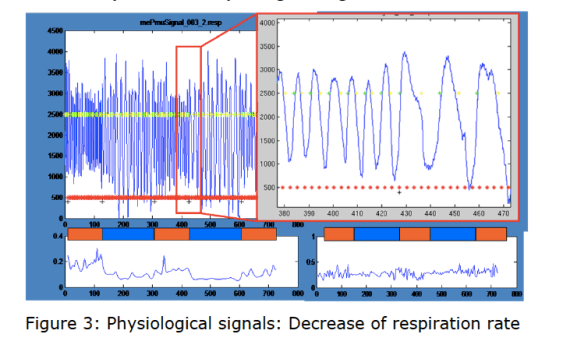
The analysis of the physiological signals revealed some
interesting effects. In one participant, the time course of
respiration showed a clear reduction in frequency and an
increase in amplitude in the meditation periods compared to
normal thinking periods (Fig. 3). Unfortunately, all other
participants did not show this effect. Still another participant
showed a reduction in variations in the meditation period but no
changes in amplitude or mean frequency (Fig. 3 right bottom).
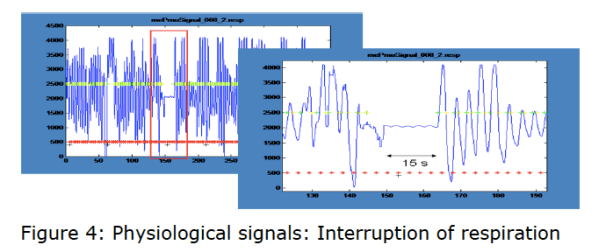
Figure 4: Physiological signals: Interruption of respiration
In a session in which the Master performed natural cognition
meditation (Fig. 4), respiration was interrupted for about 15
seconds at the end of the first meditation block. This behavior
has frequently been cited as reflecting deep state meditation.
Analysis of pulse rates showed only small and unsystematic
effects. Unfortunately, it was generally not possible to reliably
infer the meditation state from the physiological signals.
2.5.2 EEG
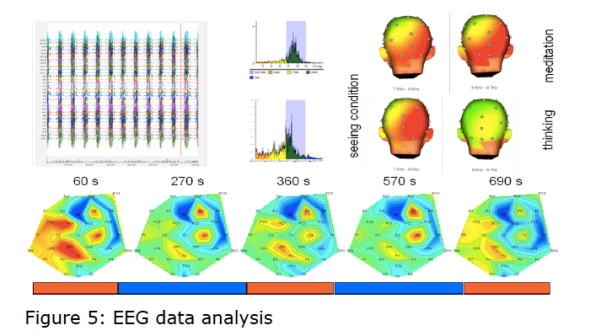
Due to a number of technical problems, it was not possible to completely
remove the MRI gradient artifacts (Fig. 5 top). After filtering out
the remaining frequency components, we could determine a
small change in EEG amplitude in different frequency bands.
While we observed a decrease of beta activity in the meditation
period over left parietal and central electrode sites (CZ, CP1,
FC), beta activity was increased over the electrodes in right
central electrode sites (C4, F4) (Fig. 5 bottom). Preliminary
time-frequency analysis of the EEG signals pointed to increased
power in the lower alpha bands over frontal and parietal
electrode sites during meditation compared to normal thinking
conditions in the stimulus switching task.
2.5.3 fMRI
2.5.3.1 Group analysis
We first calculated average group results from all investigations
of the meditation condition. Although individual results were
quite different, we nevertheless found some interesting
activations and deactivations already in our preliminary analysis,
which assumed more or less the same activations over the whole
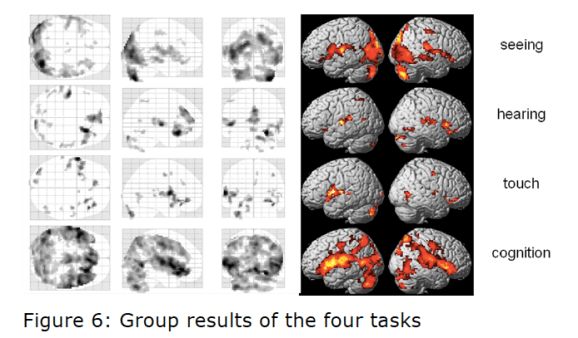
meditation periods (Fig. 6). There were higher activations in the
visual cortex while performing meditation in the seeing
condition, whereas highest activation in the hearing condition
was found in the left Heschl’s gyrus. Main activation in the
touch condition was located in the left insula, and the cognition
17 Neuroimaging Experiments on Meditation
task generated additional activations in regions of the parietal
lobes.
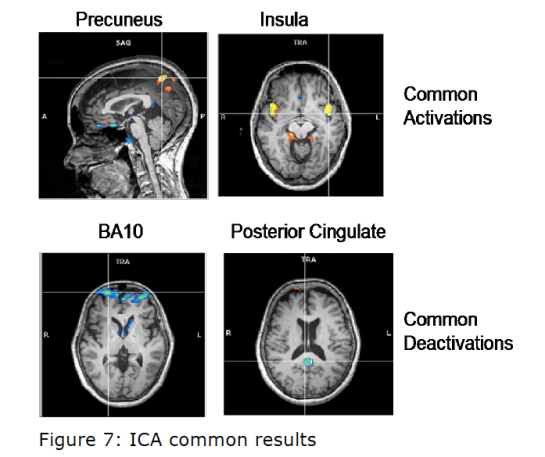
A more elaborate analysis method allowing transient time
courses of the BOLD-signal (the so called independent
component analysis, ICA) showed comparable results. We found
the following common activations and deactivations in all 4
different meditation types when contrasting meditation with
normal thinking (Fig. 7):
• activations in bilateral precuneus, implicated in selfprocessing
and consciousness (Cavanna 2007),
• activations in the bilateral insula, implicated in interoception
(Craig, 2009),
• deactivations in frontopolar region of the brain, namely,
BA10, involved in strategic processes including memory
retrieval and executive function, and
• deactivations in the posterior cingulate, implicated
consistently in the default network of brain function
(Raichle, 2001).
Activations pertaining to specific meditation types (meditation
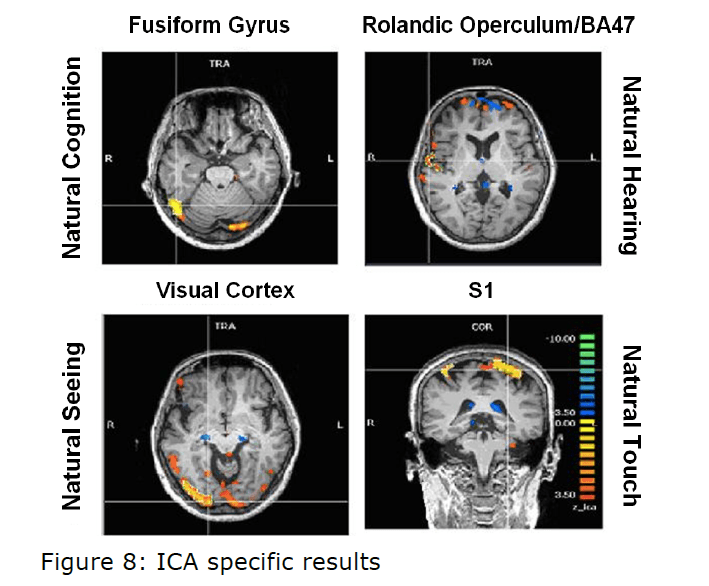
versus normal thinking contrast) were as follows (Fig. 8):

1. enhanced activation of the fusiform gyrus (FFG) during
natural cognition meditation condition,
2. enhanced activation of the right rolandic operculum and
inferior frontal gyrus (BA 47) during the natural hearing
meditation condition,
3. enhanced activation of the visual cortex during the natural
seeing meditation, and
19 Neuroimaging Experiments on Meditation
4. enhanced activation in the somatosensory cortex during the
natural touch meditation condition.
2.5.3.2 Individual analysis from experiments with the Master
Thích Thông Triệt
Some experiments were only performed with Master Thích
Thông Triệt as he is able to reach deeper and more intense states
of mind.
Visual and auditory Naming of animals and tools
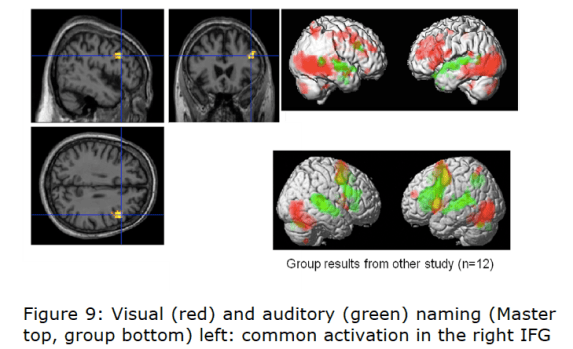
Figure 9: Visual (red) and auditory (green) naming (Master
top, group bottom) left: common activation in the right IFG
With the visual and auditory naming task (Fig. 9), we could
identify differentially activated regions in visual and auditory
association areas and common activations in language areas
(Broca’s and Wernicke’s areas). In particular, we found in the
visual naming condition activations in the bilateral visual cortex
in the ventral stream consisting of middle occipital gyri (BA 18,
BA 19), fusiform gyri (BA37), inferior temporal gyri, and
middle temporal gyri. These structures are associated with object
recognition and form representation. Further, the cerebellum (IX,
X) and inferior parietal lobes were activated prominently in the
right hemisphere. In contrast to these regions, the superior
temporal gyri lighted up only in the auditory naming task.
Regions common to both tasks were the triangular part of the
right inferior frontal gyrus (IFG) and the left superior temporal
gyrus (BA22, BA42). As the Master is right-handed, a right
dominance of language processing has low probability but is still
possible. In more than 95% of right-handed men and more than
90% of right-handed women, language and speech is sub served
by the brain’s left hemisphere, but in left-handed people, the
incidence of left-hemisphere language dominance has been
reported as 73% and 61% [Knecht 2000]. However, one should
exercise caution in concluding that this difference compared to a
group of 12 right-handed students is an effect of meditation.
Different levels of thinking

The first analyses of these sessions (Fig. 10) demonstrated
common activations in the posterior end of the right middle
temporal lobe and the angular gyrus (BA39). This area is
implicated in the integration of multimoldal data and
interpretation of written words (Damasio 1994). Persinger and
colleagues (2001) have shown, that out-of-body experiences and
mystic experiences could be triggered, if the region of the
temporal lobe is stimulated with transcerebral weak complex
magnetic fields. The experimental condition “intellect” showed
activations in the dorsolateral superior frontal gyrus. Commonly
activated regions with “intellect” and “mind-base” condition
activate the right triangular part of the inferior frontal gyrus
(Broca’s area, BA 44/45) and the brain regions to the left and
right precentral gyrus (premotor cortex, BA6). Brain areas
involved in “conscious” thinking were mainly constrained to the
temporal and parietal lobe. It is important to note, that the area
within BA 44/45 common to “intellect” and “mind-base”
thinking is in the same region, but not at the same position as the
area in the right frontal lobe that was found to be commonly
activated by the visual and auditory naming task.
Different levels of meditation depth (levels of Awareness)
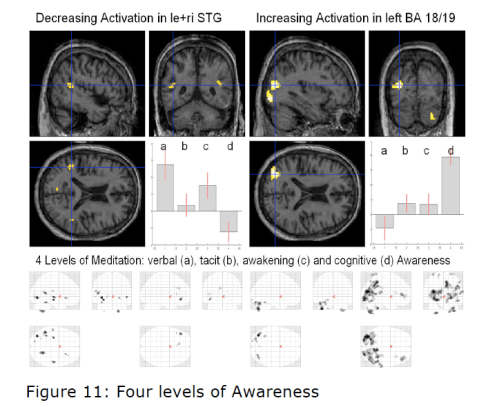
Analysis of these different meditation levels (Fig. 11) showed a
decrease of activation in the left and right superior temporal
gyrus (STG) and an increase of activation in the left higher
visual areas (BA 18/19), the right inferior frontal gyrus (IFG),
the right insula and right cerebellum (Crus1). Inspecting the four
different “glass” brains (maximum intensity projection, MIP)
(Fig. 10, bottom) one notices a widespread global increase in the
occipital lobe for cognitive awareness.
Different Meditation tasks with and without stimulation
In our first experimental protocol (section 2.2.1), external
stimulation was held constant to elicit only the differences
between normal thinking and meditation. In the currently
reported experiment, the design was changed so that the brain
state was kept constant (either baseline or meditation), while the
external stimulation was switched on and off. For this
experiment, we used a design with 11 blocks of 30 seconds
resulting in a session length of 5 minutes 30 seconds. Each of the
three tasks “seeing”, “hearing” and “touch” were performed two
times, first with normal thinking and in the next run with
meditation. Comparing the activations induced in these two
sessions, we identified differences in processing external stimuli
in the different brain states.
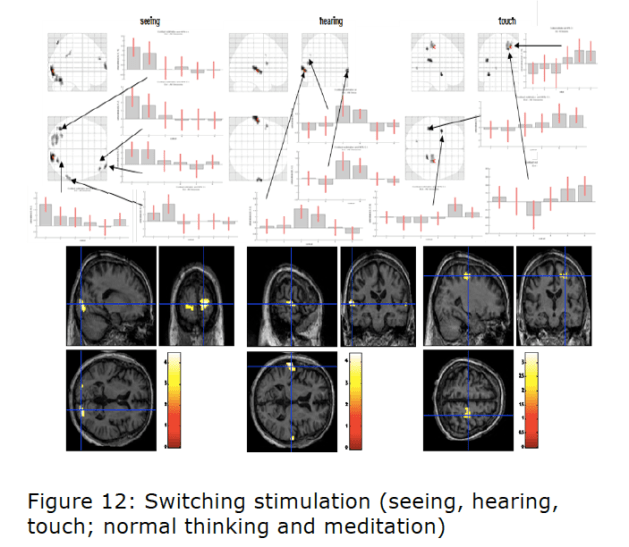
In the “seeing” session (Fig. 12, left), we found activated regions
in the primary visual cortex on both sides, the left cerebellum
and left fusiform gyrus, the right supramarginal gyrus and
inferior parietal lobe (BA40) and the middle and superior frontal
gyrus (BA10). In the “hearing” condition (Fig. 12, middle), we
identified the main activations in left and right superior temporal
gyri (BA22/42) and in the left frontal operculum (BA44/45). In
the “touch” condition (Fig. 12, right), we found activations in
left insula and rolandic operculum and in right postcentral gyrus,
the primary somatosensory area. We generally observed a
smaller amplitude in the meditation condition compared to
normal thinking in all three primary sensory areas. This can be
interpreted as reduced sensitivity to changes of external
stimulation in the meditative state. Two explanations are
possible, that is either the gain of the external input is decreased
or the level of activation is maintained by “filling up” with
internal generated activity.

It was not possible to find a comparable design for the
“cognition” condition as there was no external input. Therefore,
we decided to use a design with 1 minute blocks of normal
thinking and meditation without external input and simultaneous
concentrating on “seeing”, “hearing”, “touch” and “cognition”.
This fast switching between the two states was only possible
with a very experienced meditator as Master Thích Thông Triệt.
When the blocks were only 30 seconds long, he experienced
problems leaving the meditative state. We thus settled for 60
second blocks. In this session, the online evaluation already
provided some findings. However, more sophisticated analysis
including the consideration of movement parameters resulted in
less (false positive) activated regions. Nevertheless, we could
identify regions in the visual (occipital lobe, BA17, BA19),
auditory (Heschl’s gyrus, BA41) and somatosensory (BA3) areas
showing enhanced activation in the meditation state compared to
the control state.
3. Conclusions
Our results show that Śūnyatā meditation enhances perception of
external stimuli and interoception of internal bodily states, as
shown by heightened activations in sensory areas and the insula
when compared to the normal, day-to-day thinking state in
sessions with long meditation periods (3 minutes) and constant
external input. In the sessions with fast changes of external
stimuli (30 seconds), the pattern was reversed: brain activation
was reduced in the primary sensory areas in the meditation state
compared to intellectual thinking. This can be explained by an
additional activation in the time periods without external
stimulation in the meditation state as was found in the cognitive
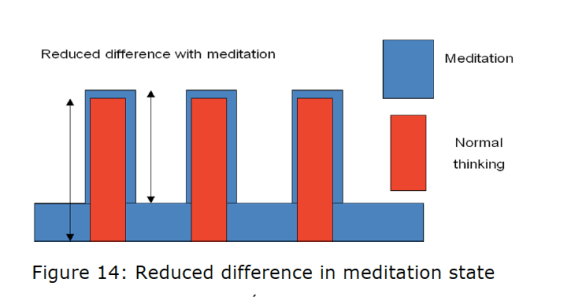
condition. If this supplementary activation is not purely additive,
that is the enhancement of activation with external stimuli is
smaller than the inserted activation without external stimuli, it
will result in a reduced difference (Fig. 14).
 Eclectic Musings by Ranga Sitaram