

Neural Engineering & Neuroimaging
Multimodal Brain-Machine Interfaces
Functional & Structural Connectomics
Brain State Decoding with Pattern Recognition
Neurorehabilitation of Perception, Action & Emotion

INTERDISCIPLINARY APPROACH TO NEUROSCIENCE
My research is at the intersection of neuroscience, imaging and computational intelligence. It is based on the pivotal question: can modulation of brain activity in selected regions and networks lead to specific changes in sensation, perception, cognition and action, and if so what are they and how can they be used in neuroscience research and clinical treatment of neuropsychological disorders? Conceptually, my work is based on the fundamental neuropsychological paradigms of learning, namely, operant conditioning, classical conditioning and associative learning, to induce changes in the brain and behavior; combining it with innovative developments in functional and structural brain imaging, physiological measurement technology, and computational algorithms.
MULTIMODAL IMAGING & BRAIN-COMPUTER INTERFACES
Brain imaging in neuroscience adopts experimental paradigms correlating a particular behavioral manipulation as an independent variable and recording the brain responses as dependent variables. Novel approaches incorporate a complementary philosophy where brain activity is noninvasively manipulated as an independent variable to observe the causal effects on behavior. In achieving these aims, I have applied state-of-the-art techniques in brain signal acquisition, including, real-time versions of fMRI, fNIRS, EEG/MEG, and also stimulation techniques such as transcranial magnetic stimulation (TMS) and functional electrical stimulation (FES): combining these with advanced experimental paradigms of experimental neuroscience and neuropsychology. I’m interested in applying these methods in: 1) communication and control in paralysis, 2) clinical rehabilitation of neuropsychological disorders, such as stroke, psychopathy and schizophrenia, and 3) scientific investigations in neuroscience, of emotion, cognition, motor function, and distinction between conscious and non-conscious perception.
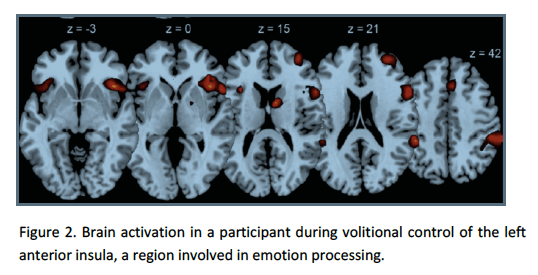
Traditional approaches to diagnosing and treating neuropsychological and psychiatry disorders, such as depression, schizophrenia and other psychopathologies, have largely relied on subjective reports and behavioral observations of the patients, followed by pharmocological and cognitive-behavioral therapeuric interventions, with mixed results. Recent studies, applying innovative techniques in neural self-regulation and control, in clinical populations are beginning to demonstrate that patients can be trained to modulate and correct abnormal brain leading to symptom improvements and behavioral changes.
NEUROREHABILITATION OF MOVEMENT DISORDERS
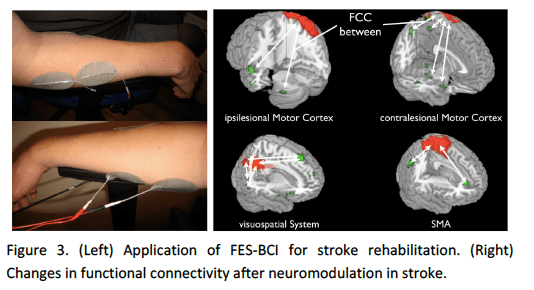
Another topic of research focus is the development of Functional near infrared spectroscopy (fNIRS) as a more portable and flexible imaging approach for movement research. Recent studies in my laboratory have demonstrated that fMRI and fNIRS BCIs could be used for rapid imaging and rehabilitation of stroke patients.
 Eclectic Musings by Ranga Sitaram